A Pilgrimage Through Faith and History
In an age of instant gratification and digital distraction, the ancient practice of pilgrimage might seem like a relic from another era. Yet pilgrimage endures as one of the most profound spiritual disciplines in the Christian tradition.
It offers something the modern world rarely provides: silence, hardship, reflection, and a deliberate journey toward the divine.
Pilgrimage is not tourism. It is a physical journey undertaken for spiritual transformation.
For more than a thousand years pilgrims have walked across the mountains and plains of northern Spain toward a single destination: the shrine of the Apostle Saint James the Greater in Santiago de Compostela.
This journey, known as the Camino de Santiago, the Way of Saint James, became one of the great pilgrimages of Christendom, alongside Rome and Jerusalem. Medieval kings, monks, soldiers, and peasants once walked these same roads guided by the Milky Way, which medieval pilgrims called the Camino de las Estrellas, the Way of the Stars.
At Sacred Spain, we approach the Camino not simply as a long-distance trek but as a journey through the spiritual and historical heart of Christian Europe.
Pilgrimage in the Christian Tradition
Pilgrimage has biblical foundations woven deeply into the story of God’s people.
In the Old Testament, Abraham’s call to leave his homeland set the pattern. God commanded him:
“Go from your country… to the land I will show you.” (Genesis 12:1)
This was not merely travel. It was a journey of faith, a physical movement reflecting a spiritual transformation.
The Israelites’ forty years in the wilderness under Moses were themselves a form of pilgrimage, a journey through hardship that forged a covenant people.
The New Testament deepens this theme.
Christ himself lived the life of a pilgrim. His ministry unfolded on roads between towns and villages. One of the most powerful resurrection stories occurs on a journey: the road to Emmaus, where two disciples walked in despair until the risen Christ joined them along the way.
The early Church quickly embraced pilgrimage as a form of devotion. By the fourth century, Christians were traveling to Jerusalem to pray at the sites of Christ’s passion and resurrection. One pilgrim named Egeria recorded her travels in a journal that vividly describes liturgy and prayer in the Holy Land.
Pilgrimage had become a powerful spiritual tradition.
The Birth of the Camino de Santiago
The Camino emerged in the ninth century after the discovery of the tomb of Saint James the Greater in Galicia.
According to tradition, James had preached the Gospel in Roman Hispania before returning to Jerusalem, where he was martyred. His disciples miraculously transported his body back to Spain, where it remained hidden until it was rediscovered around 813 AD in a field illuminated by mysterious lights, giving rise to the name Compostela, often interpreted to be a corruption of campus stellae, the “field of stars” in Latin.
King Alfonso II of Asturias built the first church over the tomb, and soon pilgrims from across Europe began traveling to the shrine.
By the 12th century the Camino had become one of the most important pilgrimage routes in Christendom. The cathedral city of Santiago rivaled Rome and Jerusalem as a destination for the faithful.
Pilgrims wore the scallop shell, symbol of Saint James, and followed routes across France, Spain, and Portugal. Guidebooks like the Codex Calixtinus described roads, hostels, shrines, and hymns for pilgrims traveling across medieval Europe.
Spain and the Camino
Spain played a decisive role in the history of the pilgrimage.
During the Reconquista, the centuries-long struggle to reclaim the Iberian Peninsula from Muslim conquerors, the Camino became more than a devotional route. It symbolized Christian defiance, renewal and unity.
Pilgrims walking the Camino passed through lands where monasteries, cathedrals, and fortified towns reflected a civilization rooted in Christian faith.
In this sense the Camino was not merely a journey across geography. It was a journey across the spiritual landscape that shaped Western civilization. This deeper dimension is central to the Sacred Spain perspective.
Spain is not simply a place on a map. It is a land marked by centuries of Christian history, from Covadonga in Asturias, where the Reconquista began in 722, to the great cathedrals of León, Burgos, and Santiago that still guard the relics and traditions of the Church.
Walking the Camino is therefore not only a pilgrimage to a shrine.
It is a walk through the history of Christendom itself.
Why Pilgrims Still Walk the Camino Today
Despite modern technology and transportation, hundreds of thousands of pilgrims still walk the Camino every year.
Because pilgrimage answers a hunger that modern life rarely satisfies. We live in a world of constant noise, digital distraction, busy-ness and speed. Many people feel spiritually unmoored, searching for meaning beyond the routines of daily life.
The Camino offers something radically different. Walking day after day, through forests, plains, mountains, and villages strips life down to its essentials.
Pilgrims confront their physical limits: blisters, weather, fatigue, and solitude become part of the experience. Yet these difficulties are precisely what transform the journey.
Each step becomes a meditation. Each village becomes a place of encounter.
Along the way strangers become compañeros de camino, companions on the way, sharing stories, meals, and reflections.
Churches along the Camino still celebrate Mass for pilgrims, linking the journey to centuries of spiritual tradition. Several years ago, we met an American Episcopal priest who told us stories of concelebrating the Holy Eucharist with Roman Catholic priests in small parishes along the Camino, in just one example of Christian unity and how the Camino mirrors the deeper Christian understanding of life itself: a pilgrimage toward eternity.
A Sacred Spain Camino Itinerary
10 Days Walking the Way of Saint James
Our Sacred Spain pilgrimage introduces the spirit of the Camino while walking some of its most meaningful stretches. While this itinerary is modifiable, we recommend the following modest 6 or 7 miles a day itinerary.
Day 1 — Arrival in León
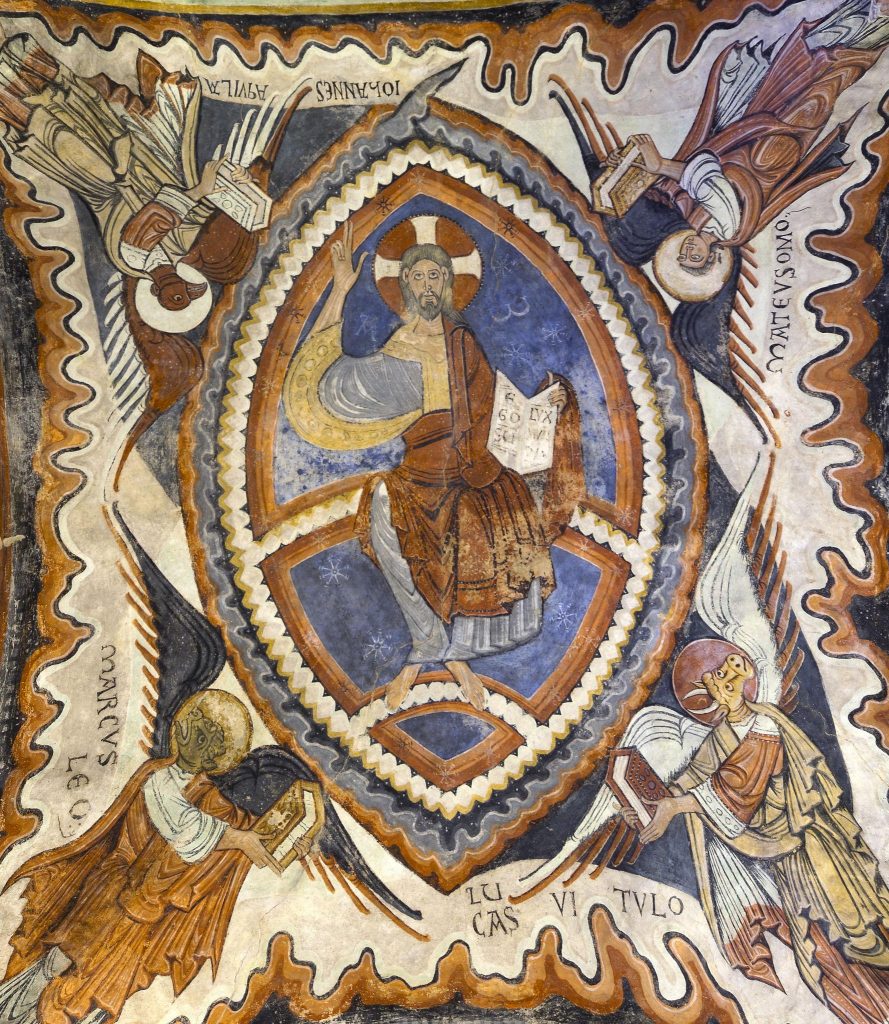
Gateway to the Camino
Pilgrims gather in the historic city of León, one of the great crossroads of medieval Spain.
Highlights include:
●The breathtaking León Cathedral, famous for its stained glass
●The Basilica of San Isidoro, home to the Royal Pantheon of León
●A pilgrim blessing to begin the journey
That evening we introduce the history and spiritual meaning of the Camino.
Day 2 — Walking the Camino
León to Hospital de Órbigo
The pilgrimage begins.
We walk toward the village of Hospital de Órbigo, crossing the legendary medieval bridge where a knight once defended the crossing in honor of his beloved.
Distance: approximately 8 mi.
Day 3 — Astorga
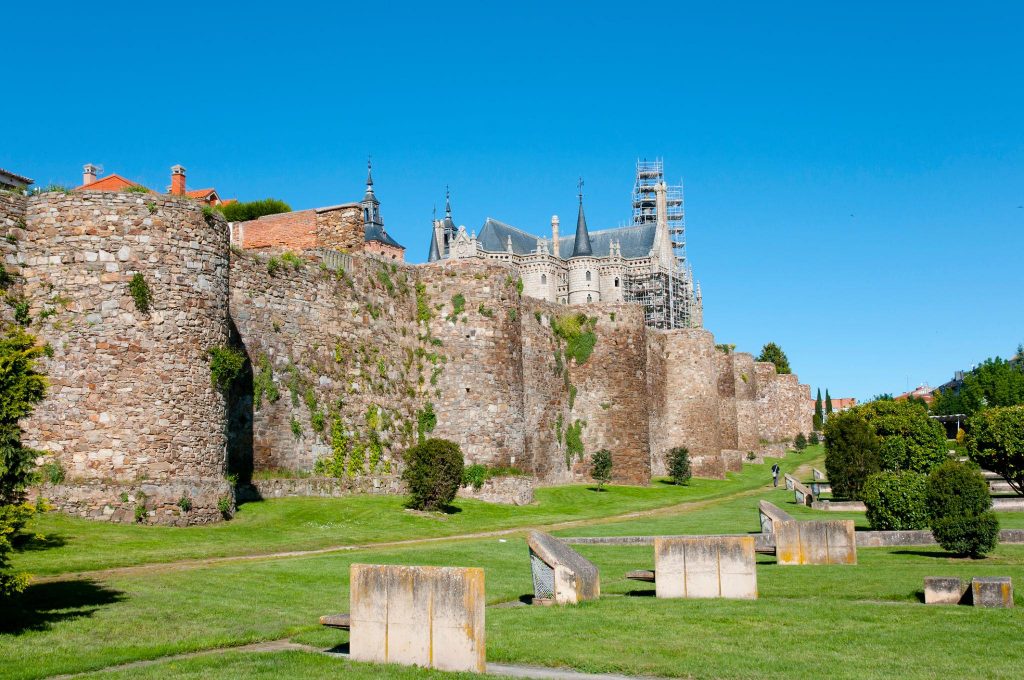
Roman Roads and Pilgrim Traditions
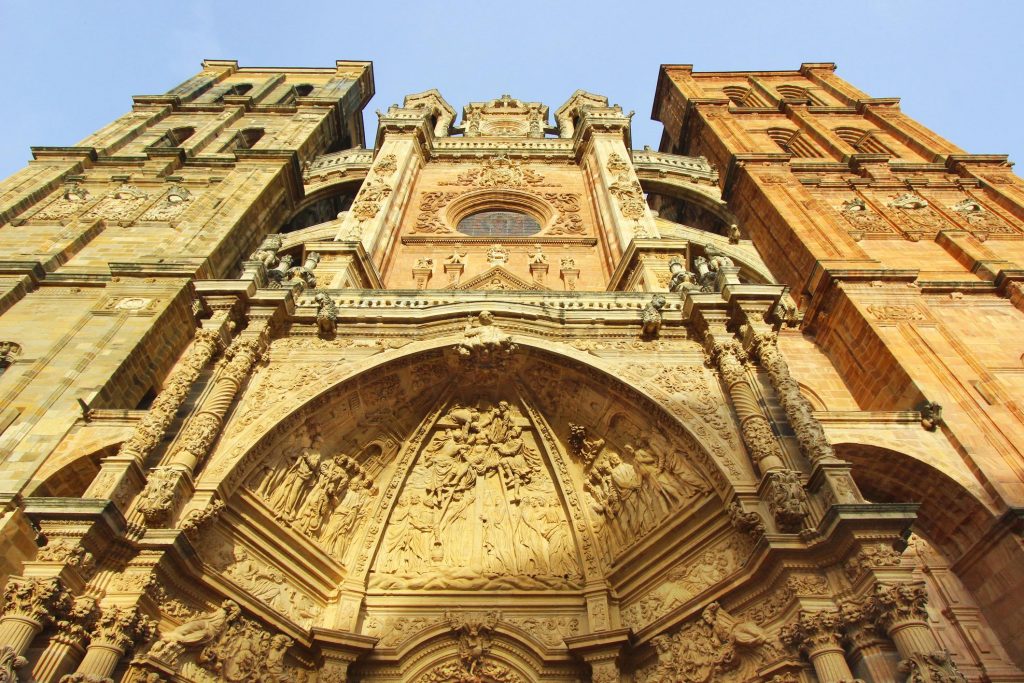
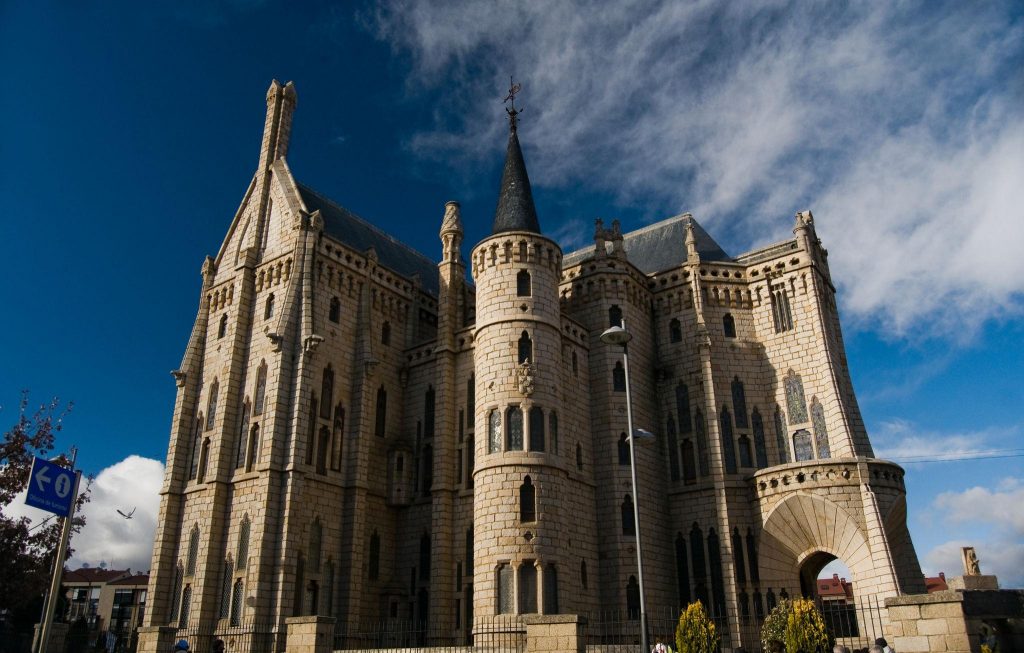
Continuing west, we reach Astorga, a city shaped by Roman history and medieval pilgrimage.
Highlights include:
●Astorga Cathedral
●Gaudí’s Episcopal Palace
●The Camino Museum
Distance: approximately 8.5 mi.
Day 4 — Cruz de Ferro
The Iron Cross
At Cruz de Ferro, pilgrims traditionally place a stone carried from home at the base of the cross — symbolizing burdens left behind.
For many travelers this is one of the most emotional moments of the pilgrimage.
Distance: approximately 6 mi.
Day 5 — Entering Galicia
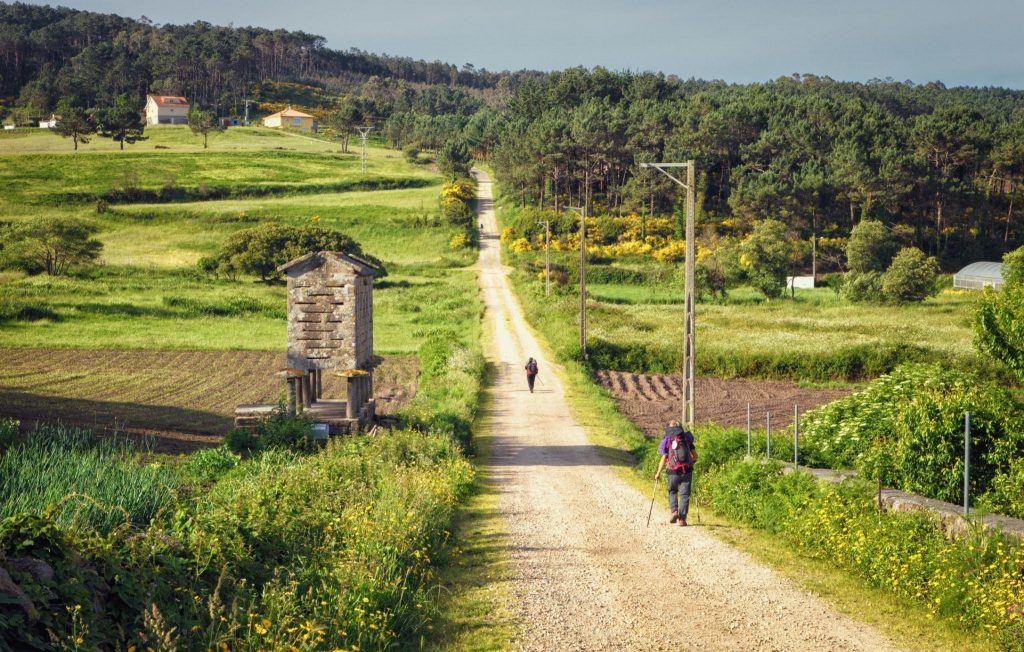
O Cebreiro
Crossing into Galicia, pilgrims arrive at the mountain village of O Cebreiro, famous for its ancient stone houses and Eucharistic miracle.
Distance: approximately 5 mi.
Day 6 — The Green Hills of Galicia
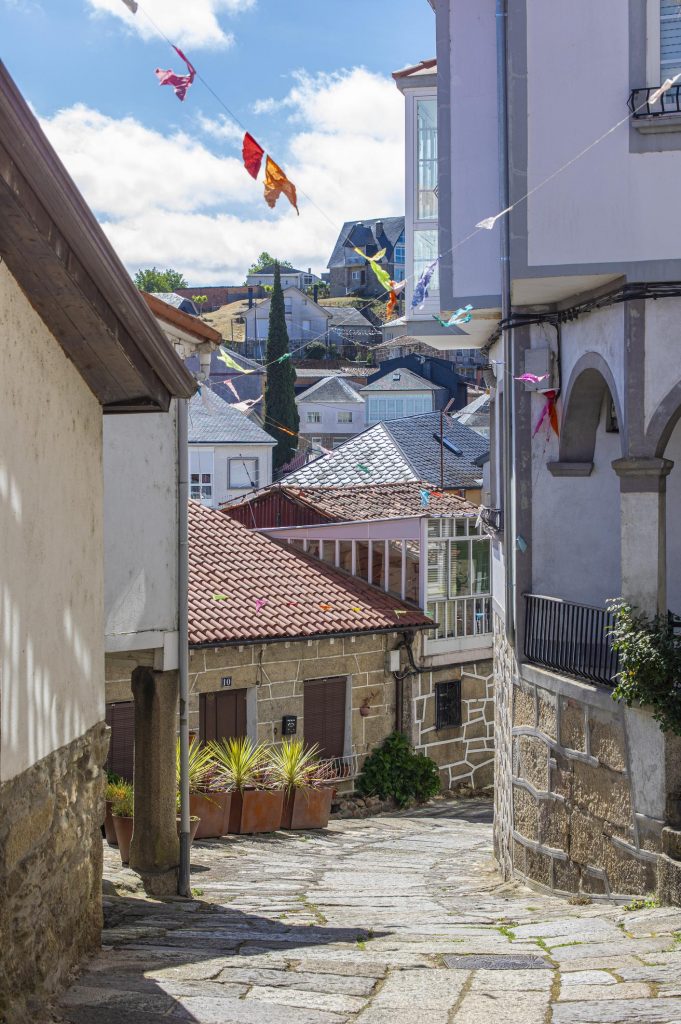
The Camino winds through forests, farms, and quiet villages.
The rhythm of pilgrimage becomes clear: walking, prayer, silence, and conversation.
Distance: approximately 7.5 mi.
Day 7 — The Final Stages
Pilgrims approach the final stretch of the Camino.
The scallop shell symbol appears everywhere along the road, guiding travelers toward Santiago.
Distance: approximately 6 mi.
Day 8 — Monte do Gozo
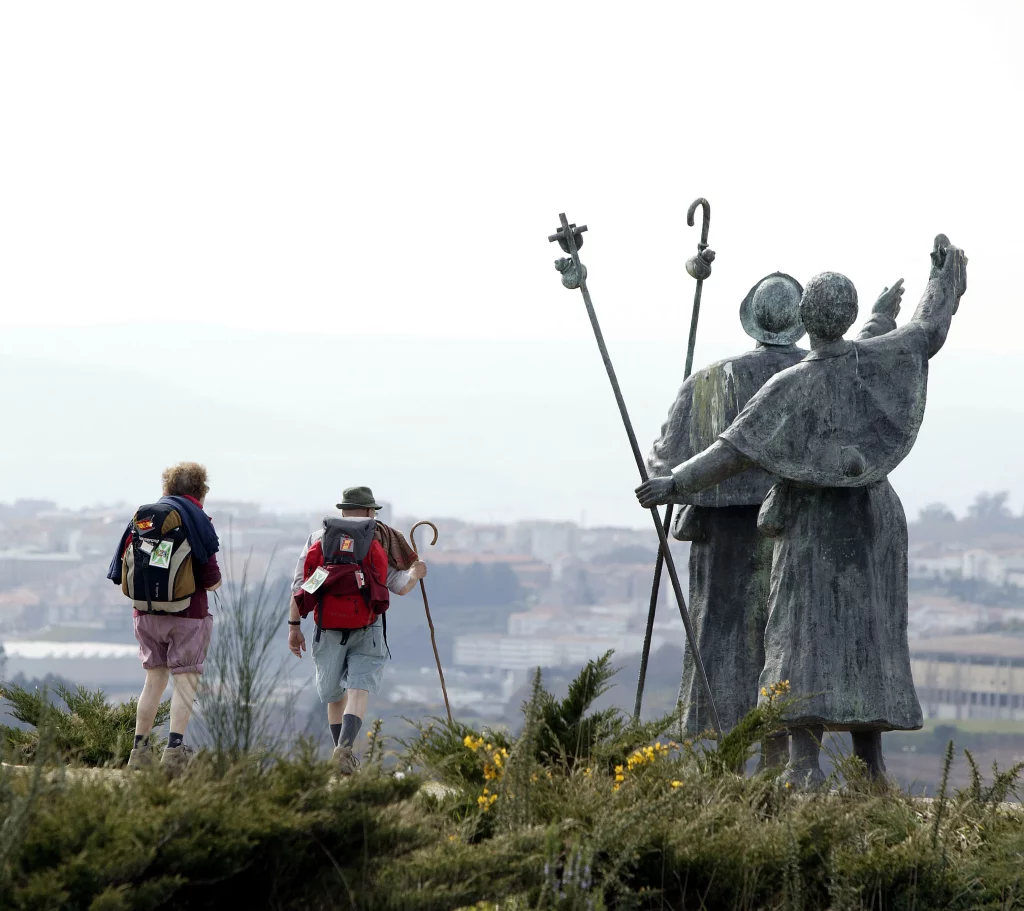
The Mount of Joy
From Monte do Gozo, pilgrims see the towers of Santiago Cathedral for the first time.
For centuries this moment has marked the emotional climax of the pilgrimage.
Distance: approximately 5.6 mi.
Day 9 — Arrival in Santiago de Compostela
Pilgrims enter the city and gather in the Plaza del Obradoiro before the cathedral.
Highlights include:
●Pilgrim Mass
●Visit to the tomb of Saint James
●The famous Botafumeiro incense ceremony (when scheduled)
Day 10 — Reflection and Departure
The pilgrimage concludes with time for reflection.
Some pilgrims continue onward to Finisterre, the Atlantic coast once believed to be the end of the world.
Others return home carrying something less visible but deeply felt: a renewed sense of purpose.
The Pilgrimage Continues
The Camino de Santiago has survived wars, civil wars, revolutions, and centuries of change because it speaks to something timeless in the human soul.
Pilgrimage reminds us that life itself is a journey. It invites us to step away from noise and rediscover what matters.
In the spirit of Sacred Spain, walking the Camino is not merely a physical trek across northern Spain. It is a walk through faith, inheritance, history, and the enduring spiritual foundations of Western civilization.
The road has been there for over a thousand years. And it still calls pilgrims today.