There is a quiet thread that runs through the spiritual geography of the Iberian Peninsula and across the Pyrenees, a thread woven through mountains, rivers, and ancient cities. It is a thread of devotion to the Blessed Virgin Mary.
For centuries, pilgrims have traveled across this land not simply to admire monuments or landscapes, but to encounter places where faith took root in history and shaped entire civilizations. From the green mountains of Asturias to the granite heights of Montserrat, from the Pyrenees to the plains of Aragón, Marian devotion has left an indelible mark on the soul of Spain, and it’s palpable to the observant outsider.
Our Marian pilgrimage linking Fátima, El Pilar, Montserrat, Lourdes, and Covadonga is not merely a journey between sanctuaries. It is a journey through the story of Christian Iberia itself.
Covadonga: Where Spain’s Story Begins
High in the misty mountains of Asturias lies Covadonga, a place small in size but immense in historical meaning.
In the early 8th century, after the fall of the Visigothic kingdom, Christian resistance to Islamic rule began here under the leadership of Pelagius, Don Pelayo. Tradition tells us that before the battle, Pelayo and his followers prayed in the cave where the Virgin was venerated. Against overwhelming odds, they prevailed against a much larger Muslim army.
The Virgin of Covadonga, affectionately called La Santina, became a symbol of hope and perseverance. For many Spaniards, Covadonga represents the spiritual spark that ignited the long slow burn that became the Reconquista.
Pilgrims who arrive today encounter not only a sanctuary but a place where faith, identity and national memory intertwine.
El Pilar: Mary’s Ancient Presence in Spain
If Covadonga represents Spain’s spiritual rebirth, El Pilar in Zaragoza represents its apostolic origins.
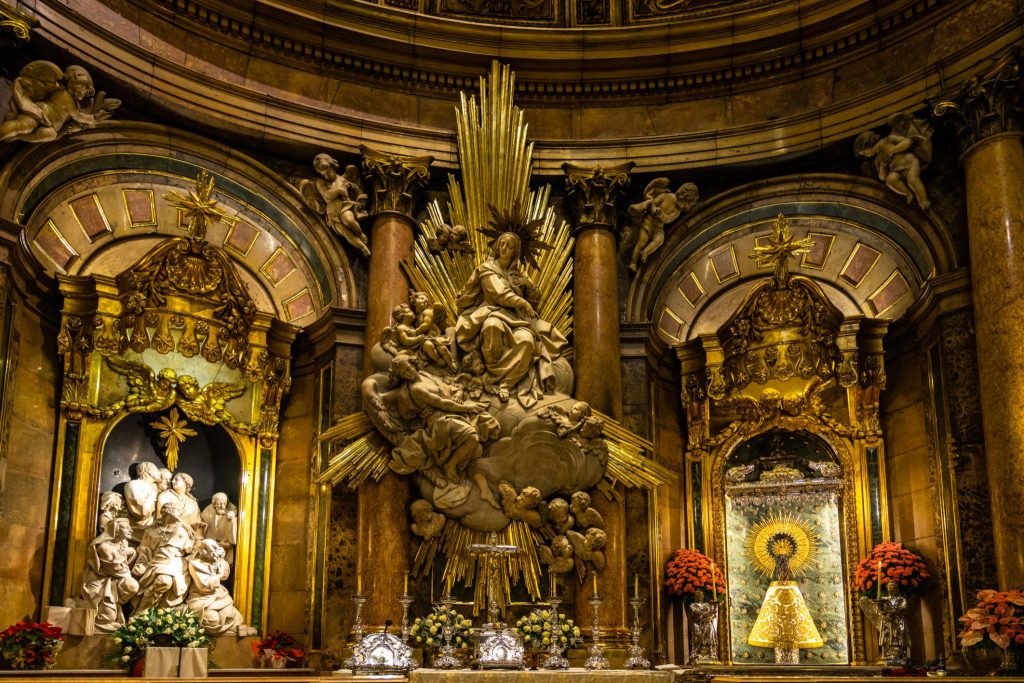
According to ancient tradition, the Apostle St. James the Greater, discouraged while preaching in Hispania, received a miraculous visit from the Virgin Mary around the year 40 AD. She appeared standing upon a pillar of jasper and encouraged him to continue his mission.
The pillar remains enshrined today within the magnificent Basílica de Nuestra Señora del Pilar, one of the most revered Marian shrines in the Christian world.
For nearly two millennia, Spaniards have come here to place their petitions before the Virgin. Soldiers departing for distant lands, explorers crossing oceans, and families seeking comfort have all knelt before the same small statue atop the ancient pillar.
Few places better capture Spain’s enduring Marian devotion.
Montserrat: The Black Madonna of Catalonia
Further east, rising dramatically above the Catalonian plains, Montserrat looks almost otherworldly. Its serrated peaks appear like a crown carved from stone.
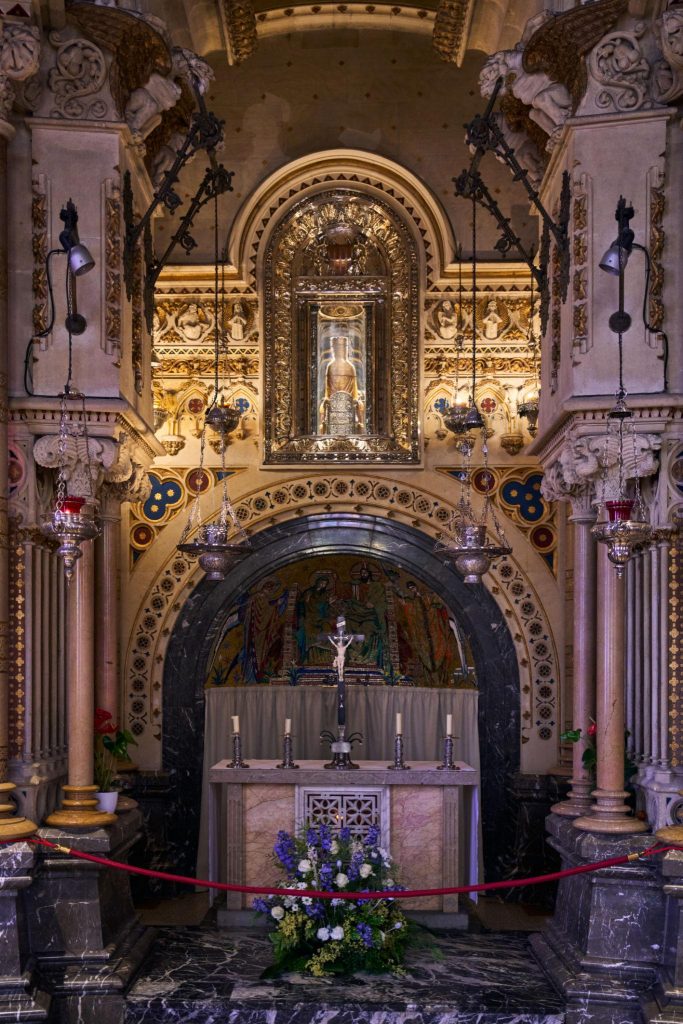
Hidden within this mountain lies the monastery that guards La Moreneta, the beloved Black Madonna of Montserrat. Tradition says the statue was discovered by shepherd children in the 9th century after a mysterious light appeared in the mountains.
Over time, Montserrat became not only a spiritual center but also a cultural heart of Catalonia. Kings, saints, and ordinary pilgrims have climbed its paths seeking the Virgin’s intercession.
The mountain itself seems to invite contemplation. Silence, wind, and rock combine to create one of the most powerful spiritual landscapes in Europe.
Lourdes: A Grotto of Grace in the Pyrenees
Just beyond Spain’s northern frontier lies Lourdes, France, perhaps the most internationally known Marian sanctuary in the world.
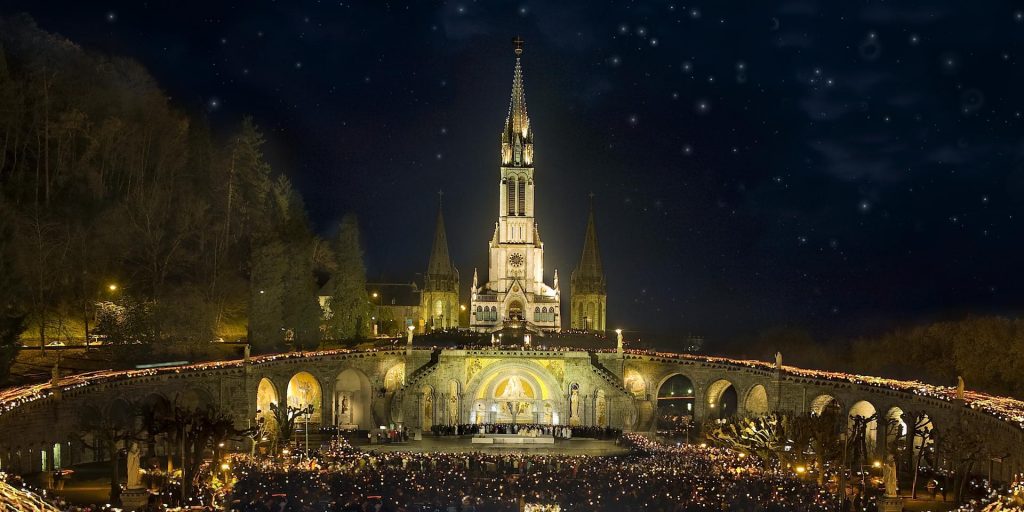
In 1858, a young girl named Bernadette Soubirous reported a series of apparitions of the Virgin Mary in a grotto along the Gave de Pau river. The Lady identified herself with the mysterious words: “I am the Immaculate Conception.”
Soon after, a spring emerged from the ground. Reports of healing spread, and pilgrims began arriving from every corner of the world.
Lourdes today is a place of profound humility. The candlelight processions, the quiet prayers at the grotto, and the presence of the sick and the suffering remind pilgrims that Marian devotion is not only historical, it is deeply human.
Fátima: A Message for the Modern World
To Spain’s west, in neighboring Portugal, stands Fátima, one of the most significant Marian apparition sites of the modern era.
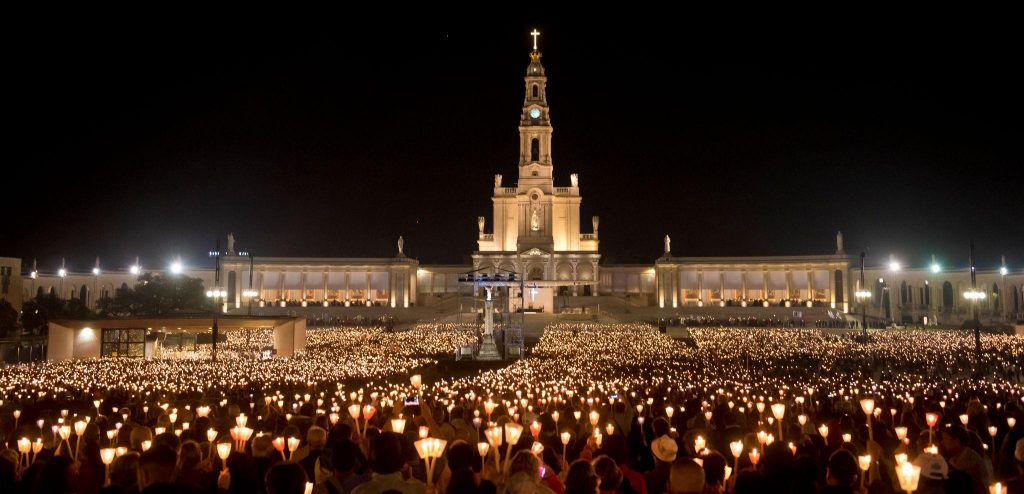
In 1917, three shepherd children, Lúcia, Francisco, and Jacinta, reported a series of apparitions of the Virgin Mary. Her message emphasized prayer, repentance, and the power of the Rosary.
The vast sanctuary built around the site now welcomes millions of pilgrims each year.
Despite its size, Fátima retains a sense of simplicity. Pilgrims still walk the esplanade on their knees, whispering prayers that echo the devotion of generations before them.
Spain at the Center of the Marian World
Seen together, these sanctuaries form more than a pilgrimage route, they constitute a spiritual map.
From Covadonga, where Christian resistance first stirred, to El Pilar, one of the oldest Marian traditions in the world; from the mystical mountain of Montserrat to the international pilgrimage centers of Lourdes and Fátima, the story of Marian devotion unfolds across the lands that shaped Western Christendom.
Spain stands at the heart of this arc. For centuries, Spanish culture has carried a uniquely intense love for the Virgin Mary, expressed in art, music, architecture, and the daily rhythm of life.
To walk this pilgrimage is to experience that devotion firsthand.
It is to move through landscapes where history and faith meet, where ancient sanctuaries still receive pilgrims, and where the quiet presence of the Virgin continues to inspire hope.
And for those who undertake the journey, one truth becomes clear: these places are not relics of the past.
They are living sanctuaries, waiting, as they always have, for faithful pilgrims to arrive.